20 min/day

Behavioral Activation Schedule

A fundamental CBT tool for planning activities that provide mastery and pleasure to combat low mood.

Mood & Depression
Beginner
20 min/day

Behavioral Activation (BA) is one of the most effective and research-backed treatments for depression and low mood. The core idea is that when we feel low, we naturally tend to withdraw from the world and stop doing things that once gave us joy or a sense of achievement. This creates a vicious cycle where inactivity leads to lower mood, which in turn makes us even less likely to be active.

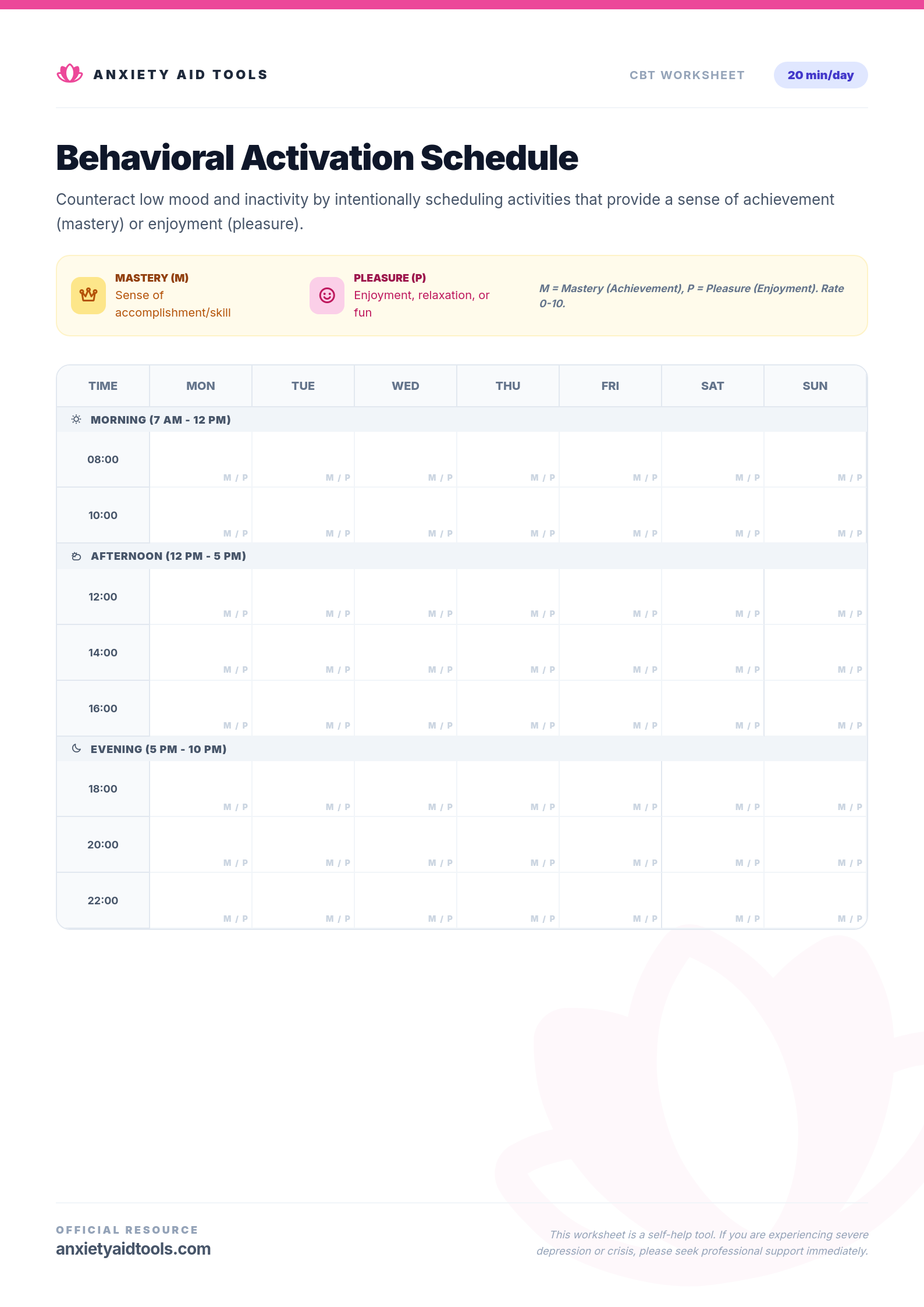
The Behavioral Activation Schedule helps you break this cycle by intentionally re-introducing activities into your daily life. It focuses on two specific types of activities: Mastery (things that make you feel capable or productive, like cleaning a room or finishing a task) and Pleasure (things that provide enjoyment, like reading a book or walking in nature).

By planning these moments in advance and rating your levels of achievement and enjoyment afterward, you can identify which activities have the greatest impact on your mood. This worksheet provides a weekly grid divided into morning, afternoon, and evening blocks to help you build a more balanced and fulfilling routine.
Behavioral Activation Schedule

Behavioral Activation Schedule

A fundamental CBT tool for planning activities that provide mastery and pleasure to combat low mood.

When to Use

  • When feeling lethargic or lacking motivation
  • During periods of low mood or depression
  • To break a cycle of social withdrawal
  • When you feel like your days lack structure or purpose

How to Use

  1. 1
    Identify Goal Activities: List a few small tasks (Mastery) and simple joys (Pleasure).
  2. 2
    Schedule in Advance: Use the grid to plan at least one M or P activity per block.
  3. 3
    Rating the Experience: After the activity, rate the Mastery and Pleasure from 0-10.
  4. 4
    Be Realistic: Start with very small, manageable steps if your energy is low.
  5. 5
    Review and Adjust: Look for patterns in what helps your mood the most.
  6. 6
    Commit to the Plan: Try to follow the schedule based on the plan, not your current mood.

Research & References

  • Martell, C. R., Dimidjian, S., & Herman-Dunn, R. (2010). Behavioral Activation for Depression: A Clinician's Guide. Guilford Press.